
Supporting Your Child’s Cycling Journey
Bikeability is the national cycle training programme that helps children learn to ride their bikes safely and with confidence. It is a shared journey—and parents play a vital role.
- Confidence and independence: 93% of parents report increased confidence in their child’s ability to cycle on the road.
- Certificates and badges: Every child receives a physical memento of their achievement.
Our cyclist training helps to:
- Increase safer cycling
- Increase levels of knowledge, skill and awareness
- Promote increased care, co-operation and tolerance by all road users
- Promote cycling for health, pleasure and local journeys.
- Increase sustainable travel and reduce congestion towns and villages.
Our Courses for children are:
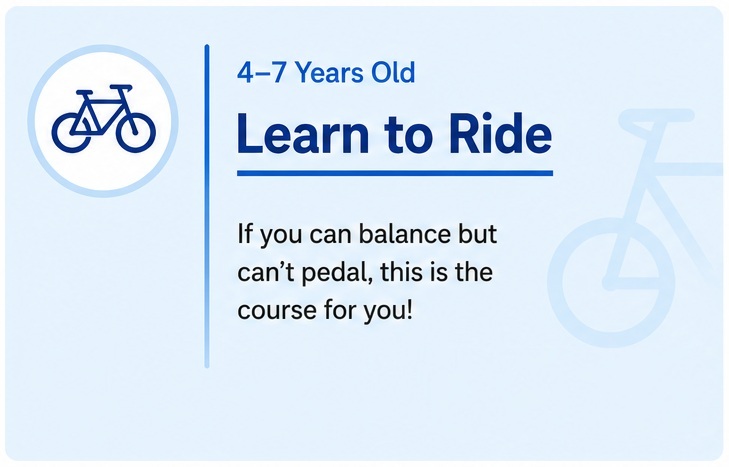
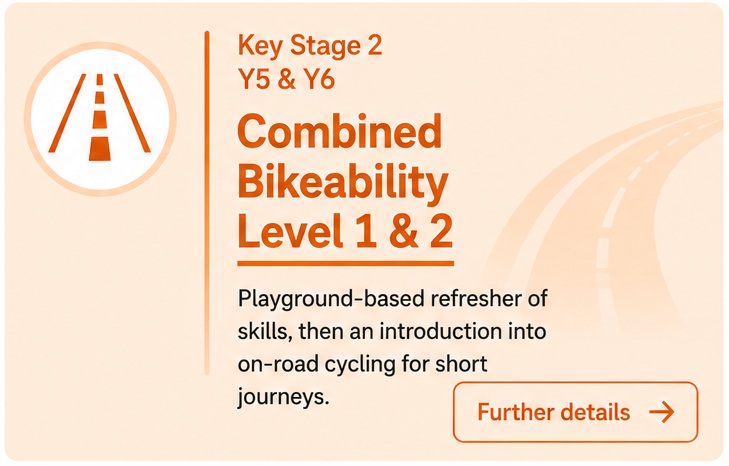
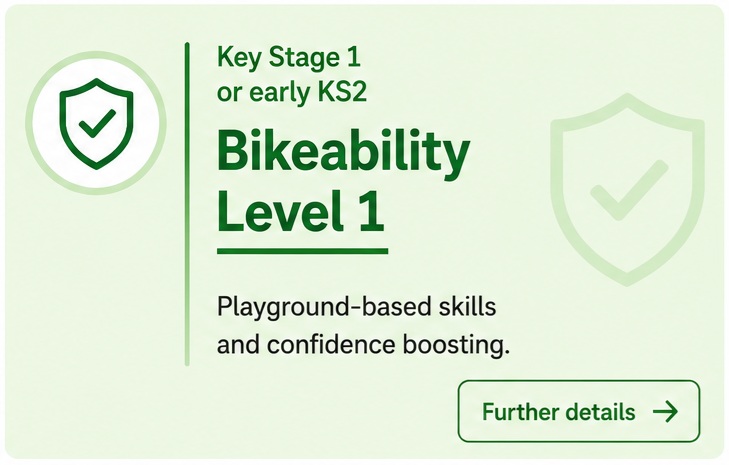
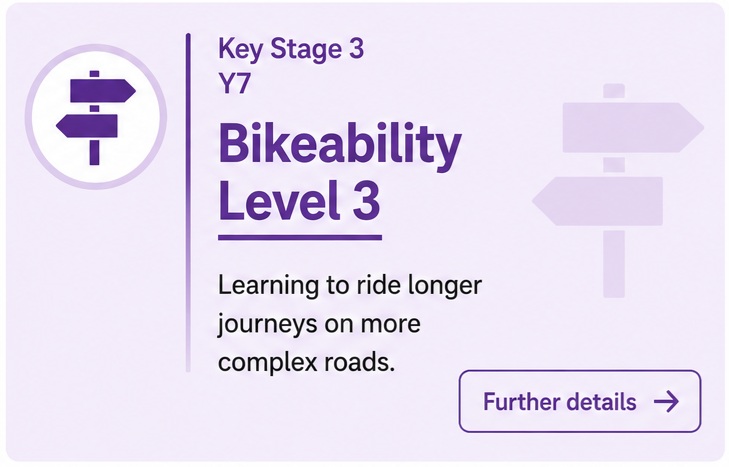
All courses are delivered by qualified National Standard Instructors and help children build the skills and confidence to ride safely and responsibly.
We work with schools to deliver the courses they feel best suit their students. Most of our training us through the combined Level 1&2 course, and we are training approximately 4000 children each year.
How You Can Help
- Have a look at the Bikeability website (https://www.bikeability.org.uk/get-cycling/cycle-training-for-children/). You can look at the different course level and see what your children will be doing, with videos showing the riding skills they will be taught.
- Encourage regular cycling practice.
- Request a family cycling session to build your own confidence and learn how to ride safely with your child. [Contact: bikeability@suffolk.gov.uk]
- Check with your child’s school to see if they are arranging Bikeability for the pupils. If they are not, or they are only arranging courses for a small number of pupils, please ask them to contact us! [link to schools page]
- You will receive details from your child’s school, which will include a QR code. Use this code to add your child’s details and sign them up for the course.
IMPORTANT
If your child has any condition or issue that affects their ability to use both brakes, or safely control their bike, please inform us or the school before the course begins. In many cases, we can suggest adaptations or modifications to help them take part successfully.
About the courses
In addition to helping young riders better control their bike, all the courses work towards the understanding of THE FOUR CORE FUNCTIONS of Bikeability.
These are:
- Making good and frequent observations
- Choosing and maintaining the most suitable riding positions
- Communicating intentions clearly to others
- Understanding priorities on the road, particularly at junctions
Bikeability Level 1 and Level 2 Combined
This course is designed for Year 5 and Year 6 pupils who can already ride a bike without stabilisers and is the course that most Primary schools receive.
The combined course includes Level 1 and Level 2 and is usually delivered over four two-hour sessions.
Session 1: Level 1 (up to 12 riders, one two-hour session)
Level 1 takes place in a traffic-free area and focuses on cycle control and safe riding skills to prepare children for riding on the road. It is not a learn-to-ride course.
- basic cycle safety checks
- getting on and off safely
- starting, pedalling and stopping with control
- riding in a straight line with good balance
- steering accurately and avoiding obstacles
- looking behind while staying in control
- riding one-handed when ready, for signalling practice
Sessions 2, 3 and 4: Level 2 (up to 12 riders, three two-hour sessions)
Level 2 introduces on-road riding at carefully risk-assessed locations. Children learn the practical skills they need for everyday journeys on quiet local roads.
- starting and finishing a journey safely at the roadside
- looking all around, including behind
- understanding road position and when to signal
- passing parked cars and side roads safely
- turning left and right at simple junctions
- using a stop-and-U-turn safely
- understanding cycle lanes and basic Highway Code rules
Bikeability Level 3
Bikeability Level 3 is the highest level of the national cycle training programme. It helps children develop the confidence and skills needed to ride independently on real roads, including more challenging traffic situations.
The course is ideal preparation for cycling to secondary school and beyond, and is aimed at students who are entering, or in, Y7. It is delivered to groups of 3 or less.
Whilst is always best if they have previously attended a Level 1&2 course, we always teach to the rider’s ability level.
Children who complete Level 3:
- Become safer, more confident independent cyclists
- Learn how to cope calmly with real-world traffic situations
- Improve decision-making skills that support road safety
- Develop lifelong healthy and sustainable travel habits
- Gain confidence riding on busier roads and at more complex junctions
During Bikeability Level 3, riders will learn how to:
- Ride confidently in busier traffic environments
- Deal with more complex junctions
- Navigate multilane roads and roundabouts (where appropriate)
- Improve road positioning to stay visible and safe
- Make safe decisions when cycling independently
- Understand the behaviour of other road users and anticipate risks
- Plan and complete short journeys safely, including routes to secondary school
Level 3 is often offered as a FREE holiday course, so visit https://suffolk.cycleready.co.uk/publicbooking to see what courses are currently available. Courses are added regularly.
What the riders need:
✅ A roadworthy bicycle with 2 functioning brakes *see Bike Check Notes
✅ A properly fitted cycle helmet.
✅ Suitable clothing:
Comfortable clothes are essential. Short, or trousers (which should be narrow at the bottom or secured with cycle clips) and trainers are ideal footwear. A lightweight waterproof jacket is advisable, as training may continue in light rain.
✅ A lightweight rucksack for carrying personal items such as:
- Water bottle
- Healthy snacks
- Jacket or other essentials
✅ The ability to ride a bike without stabilisers.
Before the Course:
To help your child prepare for the Level 1 & 2 course, we recommend:
- Practising smooth riding and braking using the bike's brakes (not feet!).
- In a safe space, encouraging them to ride with one hand off the handlebars for a short time — this will be useful during training.
Please note: This course is not designed to teach children how to ride a bike, but to improve control and teach them how to ride safely on the road.
Bike Check Notes for Parents
You should check their child’s cycle before the start of the course. They will not be allowed on the course if the instructor feels the cycle is not roadworthy.
Faults are often easily put right but occasionally a new part is required. We would therefore like to draw your attention to the following:
FITTING
Check that the cycle fits the child, i.e. that the balls of both feet are on the ground whilst sitting on the saddle with legs straight. See also that the handlebars are at a comfortable height. Adjust both these at intervals as the child grows.
BIKE CONDITION
A mechanically sound cycle is a safe cycle. Make sure that all parts are in good repair and no parts are loose.
TYRES
As on cars, worn tyres can cause crashes. Tyres must have a reasonable amount of tread and there should be no bald patches. The side walls should have no splits or bulges. Tyres must be inflated to the correct pressure.
BRAKES
All bikes must have two working brakes, brake blocks and cables should be in good condition and brake levers adjusted so that they can be operated with the minimum amount of pull. If the levers touch the handlebars in the 'on' position, the cables are too slack. Levers should be so placed that the child's fingers curve easily around them whilst the palm of the hand is on the grips. There is a variety of levers available, be sure that the ones fitted are suitable for your child.
BEING SEEN
It is important that both the cycle and the rider can be seen by other road users. Cycles must always have at least a red rear reflector and if your child intends to ride in the dark or in poor weather conditions, then they must also have lights. The use of high visibility fluorescent and reflective garments is strongly recommended. During the on-road course pupils will be provided with a fluorescent safety tabard.
BEING SAFE
Please ensure your child brings a helmet to wear on the course. It should conform to BS EN 1078:1997 or equivalent. We also suggest that a bell or alternative warning device is fitted. The correct position is on the left of the handlebar within easy reach of the grip.
Bikeability Suffolk FAQ
What will my child gain from Bikeability?
Bikeability helps children learn to cycle safely, confidently and more independently. It builds practical road safety skills as well as confidence, and cycling can also support children’s physical and mental wellbeing.
Who delivers the training?
Training is delivered by fully qualified National Standard Bikeability Instructors from the Suffolk County Council Road Safety Team. Courses are usually run by two instructors, with extra support available if needed. All instructors have Enhanced DBS checks, complete regular safeguarding training, and wear official identification.
Who can take part, and where do children ride?
Our main course, the combined Level 1 and Level 2 course, is for children aged 10 and 11, with up to 12 children in a group. We encourage all eligible children to take part. Schools can also request Learn to Ride or Level 1 courses for younger children.
- In Level 1, children practice in a safe, traffic-free space such as a playground.
- In Level 2, they progress to quiet local roads to learn how to look for traffic, signal, choose safe road positions and make simple journeys.
- In Level 3 , which is for riders who have already completed Level 2, theriders will learn how to ride confidently in busier traffic environment. These courses are for a maximum of 3 riders.
Does my child need to be a confident cyclist, and what if they have additional needs?
Children need to be able to ride a bike on their own before taking part in the combined Level 1 and Level 2 course. The training helps them improve their skills, but it is mainly designed to prepare them for riding on the road.
Children progress at different rates, so some may complete Level 1 only, while others may achieve Level 2 with some parts still marked as working towards the standard. Please include any SEND, medical, behavioural or other additional needs when registering so we can plan the training appropriately and make any reasonable adjustments needed.
What does my child need to bring?
Children need a bike that is the right size, in good working order, and has working front and back brakes. We cannot currently provide bikes for children who do not have one. We strongly encourage children to wear a helmet. They should also bring a small rucksack with a water bottle and a healthy snack, while still having their normal school lunch.
When does Bikeability take place, and what happens if the weather is bad?
Training usually lasts eight hours over two consecutive days, split into four sessions. Sessions are often 10:00–12:00 and 1:00–3:00, although exact times are agreed with the school. We try to run training whenever it is safe, so children should wear suitable clothing. If the weather is unsafe, training may be stopped and rearranged.
Can parents watch, and how much does the course cost?
Parents are not able to watch sessions because children need to focus on their instructors without distractions. If you would like to learn together, you can book family Bikeability training. Schools are asked to pay a small amount towards the cost of training, and some schools may ask parents to contribute a small fee.